Search Engine Optimization is one of the most powerful strategies for growing organic traffic, improving search engine ranking, and building long-term topical authority. However, even small SEO errors can significantly damage your website’s performance in search engines.
Many websites fail to rank not because they lack content, but because they make common SEO mistakes that affect ranking signals, weaken domain authority, and reduce organic visibility.
When search engines like Google crawl your website, they evaluate hundreds of signals including content quality, internal linking, technical structure, and keyword positioning. If your website has technical SEO errors, on-page SEO mistakes, or content optimization errors, it becomes harder for search engines to understand and rank your content. According to Google, website speed is important for SEO.
In this comprehensive guide, you will learn:
- The most common SEO problems affecting rankings
- How search engine optimization mistakes impact your site
- The biggest technical SEO errors websites make
- How to fix SEO issues to improve rankability and SERP performance
Let’s dive in.
Table of Contents
- What Are SEO Errors?
- Why SEO Mistakes Hurt Your Rankings
- Common SEO Errors That Kill Website Rankings
- Technical SEO Errors
- On-Page SEO Mistakes
- Keyword Research Mistakes
- Internal Linking Errors
- Content Optimization Errors
- SEO Audit Mistakes
- How to Fix SEO Errors for Better Rankability
- FAQs About SEO Errors
- Conclusion
What Are SEO Errors?
SEO errors are mistakes or problems in a website that negatively affect its ability to rank in search engines.
These issues can occur in multiple areas of SEO, including:
- Technical SEO
- On-page SEO
- Content optimization
- Keyword research
- Internal linking structure
When these website SEO issues are not fixed, they send negative authority signals to search engines, reducing page authority and overall SERP performance.
Examples of SEO Errors
Some common examples include:
- Slow website speed
- Broken internal links
- Keyword stuffing
- Duplicate content
- Poor mobile optimization
- Missing meta tags
Even a few SEO problems affecting rankings can significantly reduce your website’s rankability.
Why SEO Mistakes Hurt Your Rankings
Search engines aim to provide users with the most relevant and high-quality results.
If your website contains search engine optimization mistakes, Google may struggle to understand or trust your content.
These issues impact important ranking factors like:
1. Reduced Crawlability
If your site has technical SEO errors, search engines may not properly crawl your pages.
2. Poor User Experience
Factors like slow speed, broken links, and poor structure reduce user engagement.
This negatively affects:
- Organic visibility
- SERP performance
- Keyword positioning
3. Weak Authority Signals
When your content lacks depth or structure, search engines may assign lower:
- Domain authority
- Page authority
4. Lost Topical Authority
Websites that fail to cover topics comprehensively lose topical authority, making it harder to rank for competitive keywords.
Common SEO Errors That Kill Website Rankings
Many websites unknowingly make common SEO mistakes that limit their growth.
Here are the most damaging ones:
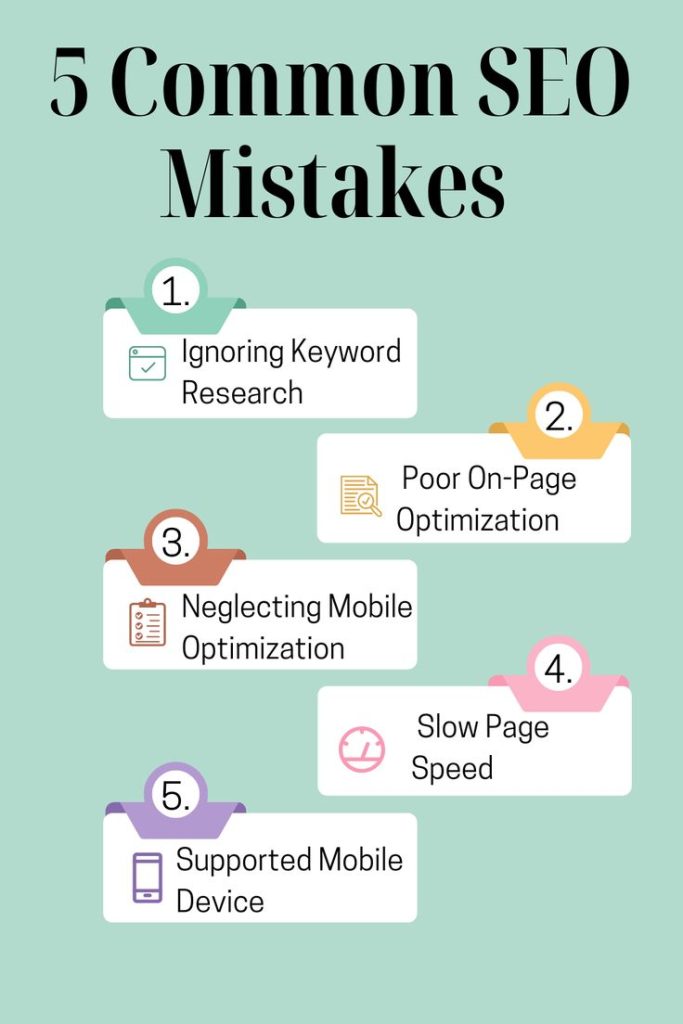
- Ignoring technical SEO
- Poor keyword research
- Weak internal linking
- Thin content
- Duplicate content
- Missing meta tags
- Broken pages
- Poor mobile optimization
These SEO audit mistakes often go unnoticed until rankings start dropping.
[Insert Mind Map: Types of SEO Errors]
This visual should categorize errors into:
- Technical SEO errors
- On-page SEO mistakes
- Keyword research mistakes
- Content optimization errors
- Internal linking errors
Technical SEO Errors
Technical SEO forms the foundation of a website’s rankability.
If technical issues exist, even high-quality content may struggle to rank.
Common Technical SEO Errors
1. Slow Website Speed
Page speed is a major ranking signal.
Slow websites lead to:
- High bounce rate
- Poor user experience
- Lower search engine ranking
2. Broken Links
Broken pages harm SERP performance and user trust.
Always fix:
- 404 errors
- Broken internal links
- Redirect loops
3. Poor Mobile Optimization
Google uses mobile-first indexing.
Websites that are not mobile-friendly experience lower organic visibility.
4. Improper Indexing
Pages blocked by robots.txt or incorrect noindex tags reduce your website’s keyword positioning.
5. Missing XML Sitemap
Search engines rely on sitemaps to understand site structure.
Without them, crawling efficiency decreases.
[Insert Image: Technical SEO Issues Diagram]
On-Page SEO Mistakes
On-page SEO focuses on optimizing individual pages to improve search engine ranking.
Many websites fail because of simple on-page SEO mistakes.
Common On-Page Errors
1. Missing Title Tags
Title tags are essential ranking signals.
Without them, Google cannot understand page relevance.
2. Poor Meta Descriptions
Although not a direct ranking factor, they impact click-through rate.
3. Improper Heading Structure
Headings should follow a logical structure:
- H1 for the main title
- H2 for sections
- H3 for subtopics
This improves readability and rankability.
4. Keyword Stuffing
Overusing keywords damages content quality and signals spam.
Instead, use semantic keywords naturally.
5. Weak Content Structure
Poor formatting affects both users and search engines.
Use:
- bullet points
- short paragraphs
- clear headings
Keyword Research Mistakes
Keyword research is the backbone of SEO.
However, many websites make critical keyword research mistakes.
Common Keyword Errors
1. Targeting Only High Competition Keywords
This makes it difficult for new websites to rank.
Instead focus on:
- long-tail keywords
- low competition topics
2. Ignoring Search Intent
Understanding search intent is essential.
Types include:
- informational
- transactional
- navigational
Ignoring this leads to poor SERP performance.
3. Not Using Semantic Keywords
Semantic keywords help search engines understand context.
Examples include:
- technical SEO errors
- content optimization errors
- SEO problems affecting rankings
Using them improves topical authority.
Internal Linking Errors
Internal linking is a powerful but often overlooked SEO strategy.
It helps distribute authority signals across your website.
Common Internal Linking Errors
1. Orphan Pages
Pages without internal links are difficult for search engines to discover.
2. Poor Anchor Text
Generic anchors like:
- “click here”
- “read more”
do not help search engines understand context.
Use descriptive anchors instead.
3. Over-linking
Too many internal links can dilute page authority.
Focus on meaningful connections.
Content Optimization Errors
Content plays a major role in building topical authority and improving organic visibility.
However, many websites make content optimization errors.
Common Content SEO Mistakes
1. Thin Content
Short or shallow content lacks value.
Search engines prefer in-depth content.
2. Duplicate Content
Copying content harms domain authority.
Always publish original content.
3. Lack of Semantic Coverage
Articles should cover related subtopics to improve contextual relevance.
4. Poor Readability
Unreadable content reduces engagement and rankings.
Use:
- short paragraphs
- lists
- headings
SEO Audit Mistakes
Regular audits help detect website SEO issues early.
However, many marketers perform audits incorrectly.
Common SEO Audit Mistakes
- Ignoring technical issues
- Not checking internal links
- Missing duplicate content
- Forgetting mobile optimization
- Not tracking keyword positioning
[Insert Flowchart: SEO Audit Process]
The audit process should include:
- Technical SEO check
- On-page analysis
- Content quality review
- Internal linking analysis
- Ranking performance tracking
How to Fix SEO Errors for Better Rankability
Fixing SEO errors requires a structured approach.
Follow these steps:
Step 1: Run a Complete SEO Audit
Use tools like:
- Google Search Console
- Ahrefs
- SEMrush
- Screaming Frog
These tools detect SEO problems affecting rankings.
Step 2: Fix Technical Issues
Focus on:
- site speed
- mobile optimization
- broken links
- crawl errors
Step 3: Improve On-Page SEO
Optimize:
- title tags
- headings
- meta descriptions
- keyword placement
Step 4: Strengthen Internal Linking
Build a logical linking structure to distribute page authority.
Step 5: Optimize Content
Create high-quality, comprehensive content that builds topical authority.
Step 6: Monitor Rankings
Track:
- SERP performance
- organic visibility
- keyword positioning
[Insert Diagram: SEO Ranking Signals]
This diagram should include factors like:
- content quality
- backlinks
- technical structure
- user engagement
Frequently Asked Questions (FAQs)
1. What are the most common SEO mistakes?
The most common SEO errors include:
- poor keyword research
- broken internal links
- duplicate content
- slow website speed
- weak content structure
These issues negatively affect search engine ranking.
2. How do SEO errors affect rankings?
SEO errors reduce rankability, weaken authority signals, and limit organic visibility, making it harder for pages to rank in search engines.
3. How can I fix technical SEO issues?
You can fix technical SEO errors by:
- improving page speed
- fixing crawl errors
- optimizing mobile performance
- correcting broken links
Regular audits help detect these problems early.
4. What tools can detect SEO problems?
Popular tools include:
- Google Search Console
- SEMrush
- Ahrefs
- Screaming Frog
These tools help identify SEO audit mistakes and website SEO issues.
5. What is the role of internal linking in SEO?
Internal links distribute page authority, help search engines discover pages, and improve topical authority across your website.
6. How does content quality impact SEO?
High-quality content improves ranking signals, builds domain authority, and increases organic visibility.
7. Can fixing SEO errors improve rankings?
Yes. Fixing SEO problems affecting rankings improves SERP performance, strengthens keyword positioning, and boosts search engine ranking.
Conclusion
SEO success is not only about creating content — it is about avoiding critical SEO errors that weaken your website’s performance.
Issues such as technical SEO errors, keyword research mistakes, internal linking errors, and content optimization errors can significantly reduce your rankability and organic visibility.
By regularly performing audits, fixing website SEO issues, and optimizing your content structure, you can improve:
- search engine ranking
- SERP performance
- domain authority
- topical authority
The key to long-term SEO growth is simple:
Identify SEO mistakes early, fix them quickly, and continuously optimize your website for both users and search engines.